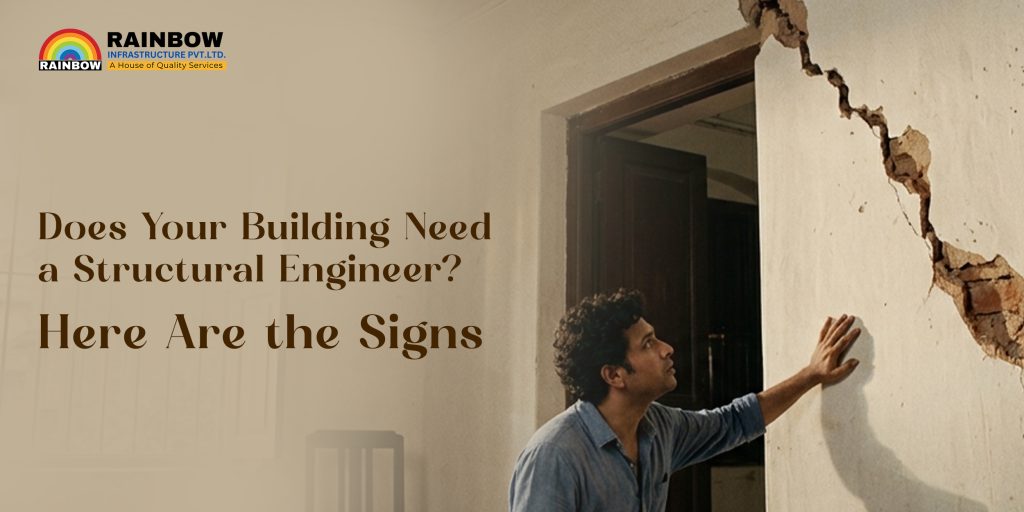
Does Your Building Need a Structural Engineer? Here Are the Signs
Somewhere in your building right now, there’s probably something that got noted and deprioritised. A crack, a sticking door, a damp patch that came back after the last monsoon. It didn’t feel urgent enough to act on. It still doesn’t. You patch it, paint over it, or tell yourself you’ll get it looked at properly when things slow down. Things don’t slow down. The thing is, buildings don’t usually collapse out of nowhere. They warn you first. Those aren’t random; they mean something. If your building hasn’t had a proper structural inspection in a while, it might be time to consider structural engineering services in Kolkata. The earlier you catch something, the less it costs to fix. Table of Contents Is a Diagonal Crack Near Doors or Windows a Serious Structural Issue or Just Normal Settling? Well, not every crack is cause for concern. Hairline cracks in plaster, especially in newer buildings, usually happen because the material reacts to temperature changes. What isn’t normal is a diagonal crack starting from the corner of a door or window. That usually means one part of the foundation has shifted more than the other. The structure ends up pulling in different directions, and the crack shows up where it can’t handle that stress. Think of it this way: take a square piece of card and twist it from opposite corners. It tears diagonally through the centre. That’s roughly what’s happening inside the wall when the foundation shifts unevenly. A crack like this doesn’t mean the building is unsafe to occupy right now. It does mean a structural assessment should happen soon, not at the next annual review. What Do Uneven Floors or a Sinking Feeling in Certain Areas of a Building Actually Indicate? Floor problems often go unreported for longer than they should. A soft corner gets avoided. A dip in the floor gets a rug thrown over it. It doesn’t feel serious enough to escalate until it is. Uneven or sinking floors usually mean one of these things: In all these cases, the floor signals that something is wrong beneath it. A structural engineering company in Kolkata can tell you how serious it actually is and what needs to happen next. You May Like: From 32KV to 220KV: The Reality of Power Transmission Projects. Why Do Doors and Windows in Buildings Suddenly Get Stuck? Got one stuck door? Maintenance call. But three doors on the same floor, all jamming in the same month, with zero humidity to blame? That’s a different conversation. Wood expands in the monsoon, and every facility manager knows that and plans around it. But when internal fire doors start sticking in February, or a loading bay shutter that’s run smoothly for years suddenly won’t close flush, or you notice the gap around a frame has visibly shifted and is wider on one side than the other, that’s not seasonal. That’s your building telling you something has moved. And buildings don’t move quietly. By the time it shows up in your doors and shutters, the frame or foundation has shifted enough to distort the openings around it. The door hasn’t changed. The structure has. This isn’t just an inconvenience. Fire doors that don’t latch properly can become a compliance issue. Roller shutters that won’t seal are a security risk. When multiple openings across the same section of a building start behaving this way at the same time, that’s a pattern and patterns like this need a structural engineer, not just a maintenance crew. Can Recurring Damp Patches or Water Seepage Cause Long-Term Structural Damage to a Building? Most people manage damp patches rather than investigate them. But water that keeps finding its way in is doing real damage behind the surface, long before it becomes visible. Here’s what that looks like structurally: For industrial and older commercial buildings in particular, this is worth investigating properly once rather than managing it repeatedly. Can Nearby Construction or Heavy Traffic Cause Structural Damage to The Building? If there’s active construction next door, pile driving down the street, or heavy vehicles routing past your facility daily, your building is absorbing that vibration. Not dramatically, not all at once, but consistently. Over time, repeated vibration loosens mortar joints, widens existing cracks and accelerates settlement in foundations that are already under stress. A building that was stable before a neighbouring project broke ground may not be in the same condition six months later. If you’ve noticed new cracks appearing or existing ones widening since nearby construction started, that’s not a coincidence. It’s worth getting looked at before the project next door is done and the liability question gets complicated. Summing Up Buildings give warnings. Most of them get brushed off until they can’t be. It’s the age of the building, last monsoon, always been like that. Sometimes that’s true. Often it isn’t. Rainbow Infrastructure’s structural engineering services in Kolkata give you an accurate picture of what’s happening before a manageable issue becomes an operational or financial problem. Get in touch with us, and we’ll take it from there. Frequently Asked Questions Hairline cracks in plaster are usually nothing more than surface marks. The ones to take seriously are wider than three millimetres, diagonal, appearing in clusters, or pushing through beyond the plaster into the masonry behind it. No universal rule, but if your building is over 15 years old and recurring issues keep getting patched rather than investigated, it’s overdue. Yes, over time. Repeated vibration loosens mortar joints, widens existing cracks and adds stress to foundations. If you’ve noticed changes since nearby construction started, get it assessed.