
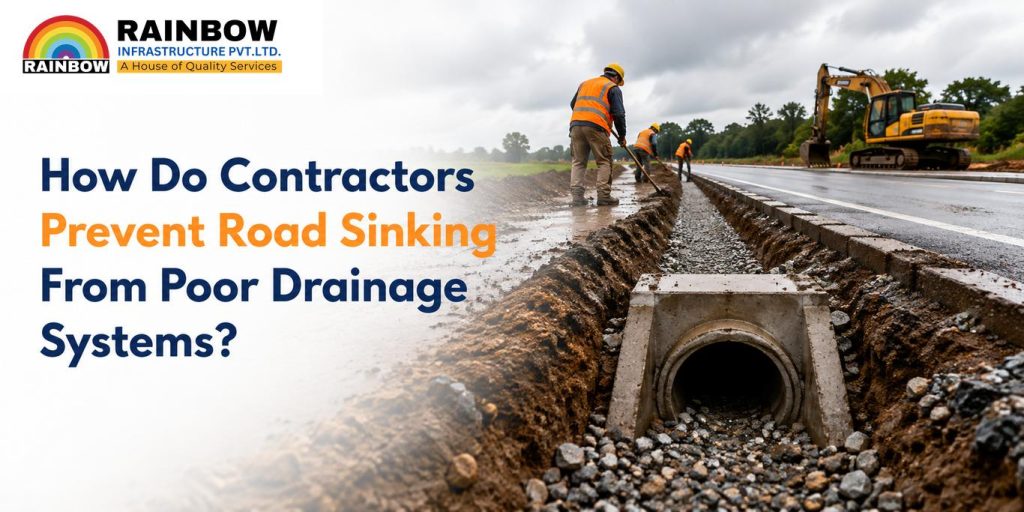
Contractors have control of the water before it even gets into the ground below, and stop the roads from sinking. They design roads to shed rainwater fast and reinforce the ground so it stays strong even after a downpour. A road that looks perfectly fine in April can turn into a cracked, waterlogged mess by August, and that shift happens underground long before it shows on the surface.
That is why picking the right civil road contractor in Kolkata matters so much, since the ground beneath a road decides how long it will actually last.
Table of Contents
- Why Do Roads Sink or Develop Potholes After Heavy Rain?
- What Drainage Systems Do Road Contractors Use to Stop Waterlogging on Roads?
- What Is Soil Subsidence in Road Construction, and How Is It Prevented?
- How Do Civil Road Contractors Prevent Roads From Sinking Due to Poor Drainage?
- How Do Contractors Design Monsoon-Resistant Roads in High-Rainfall Areas Like Kolkata?
Why Do Roads Sink or Develop Potholes After Heavy Rain?
Water seeps under a road and weakens its ability to bear weight. Subsidence and potholes are the result. The surface may look solid, but underneath the ground is as soft as a mattress with a broken spring. Every vehicle that rolls over that weak spot pushes it down a little more until the road finally caves in.
A road is only as strong as what’s under it. Damage the base, and the surface follows, no matter how good it looked on day one.
What Drainage Systems Do Road Contractors Use to Stop Waterlogging on Roads?
Water has to go somewhere the second it hits the road, and contractors plan the route for it well before the road is even paved. Slopes, gutters, ditches, whatever the terrain calls for. A road construction company in Kolkata that skips this step usually finds out the hard way, after the first heavy monsoon leaves the road underwater.
- Camber and Cross Slopes: Roads are built with a gentle centre crown so water naturally rolls off toward the sides instead of pooling in the middle.
- Curbs and Gutters: In busy city stretches, concrete curbs guide runoff straight into storm drains instead of letting it sit and soak in.
- Roadside Ditches: Shallow ditches along the edge of the pavement on rural or open roads catch water before it reaches the driving surface.
You May Find Interesting: Importance of Architectural Planning in Commercial Construction Projects
What Is Soil Subsidence in Road Construction, and How Is It Prevented?
If the soil under a road gets wet enough, it can sink or slide. The land can subside. It is dangerous because it happens quietly, with no visible sign until cracks form or the surface begins to dip.
Prevention starts underground, long before any asphalt is laid. The engineers at a professional highway construction company in Kolkata test how the local soil behaves when wet, then decide what reinforcement it needs.
How Do Civil Road Contractors Prevent Roads From Sinking Due to Poor Drainage?
Civil road contractors prevent sinking by removing trapped water from beneath the surface before it can weaken the soil. The work is underground, quiet, mostly out of sight.
- Geotextile Layers: A thin fabric sheet placed under the road. It lets water through but holds the soil back, so nothing hollows out down there years later.
- Soil Stabilisation: Lime or cement mixed into the weak spots. Once the soil is denser, it simply cannot hold as much water.
- French and Edge Drains: Trenches filled with gravel and perforated pipe run along the edges of the road. They hit the water early, long before it hits the ground below.
- Deep Compaction: The soil is rolled by heavy rollers again and again until the gaps between the particles are reduced to almost nil. Tighter soil, less room for water to sit.
How Do Contractors Design Monsoon-Resistant Roads in High-Rainfall Areas Like Kolkata?
Monsoon-proofing a road starts with expecting the worst rainfall, not the average. A reliable road infrastructure company in Kolkata plans for that from day one, with extra drainage capacity, deeper compaction, and a stronger sub-base. Build for a normal season, and the first unusually heavy one will find every weak spot.
Final Thoughts
A road is only as strong as whatever is holding it up from underneath. No amount of good luck saves a road from bad drainage. The planning has to happen before the rain does, not after. As a highway and bridge construction company in Kolkata, Rainbow Infrastructure plans for what’s underground just as carefully as what’s on top. Contact us to build roads that hold up long after the monsoon clouds clear.
Next up, we look at what it takes to keep a bridge standing strong through decades of traffic and weather.
Frequently Asked Questions
- How long does it take for drainage issues to damage a newly built road?
Damage can start within a single monsoon season if the drainage system was not designed for the local rainfall levels.
- Can an existing road be fixed if it is already sinking due to drainage problems?
Yes, contractors can inject stabilising agents or rebuild the sub-base in the affected section without redoing the entire road.
- Does the type of soil in an area affect how a road drainage system is designed?
Yes, clay-heavy soil retains far more water than sandy soil, so it needs stronger drainage and compaction to stay stable.